The contemporary global corporate landscape has evolved into an elaborate, glittering room of mirrors, a vast echo chamber where enterprise worth is routinely mismeasured by the sheer volume of its digital noise. For over a decade, a pervasive and deeply flawed modern orthodoxy has pressured organizations to conflate superficial prominence with structural permanence. Executives are regularly induced to celebrate transient metrics — fleeting clicks, casual digital gestures, and the volatile, momentary glances of an increasingly distracted passing crowd. Millions in capital are systematically diverted away from foundational security and poured instead into the insatiable furnaces of third-party attention markets.
1. The Socio-Economic Hook: The Vanity Tax
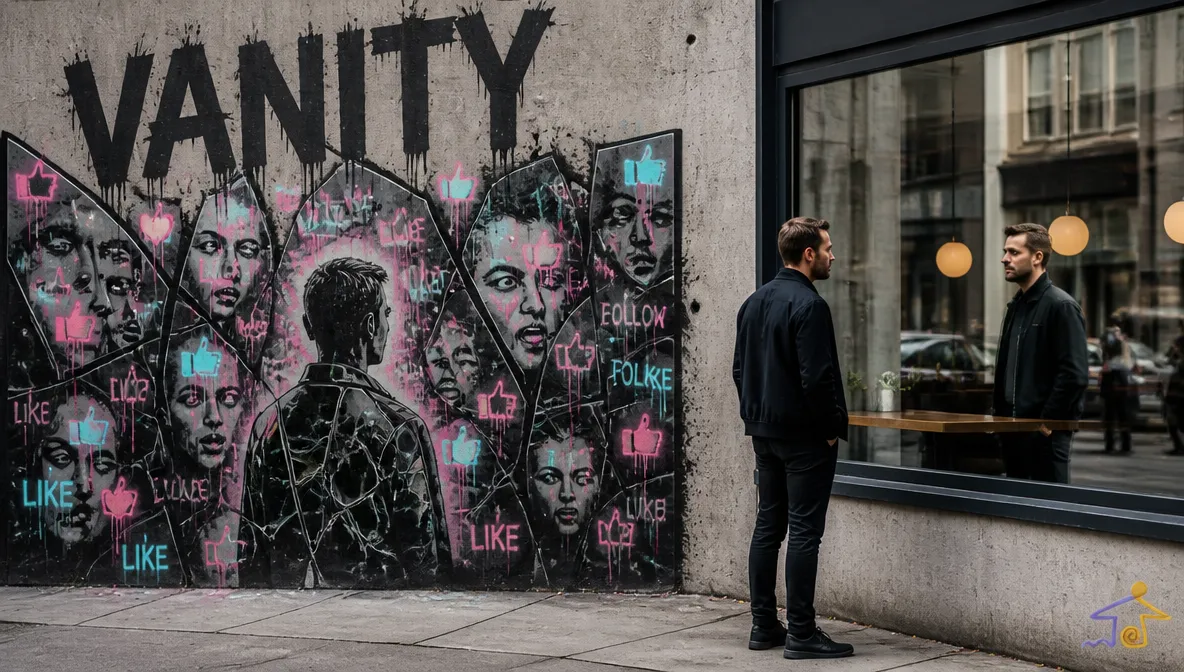
Let us dissect this collective delusion with the clear-eyed irony it deserves. Industry leaders routinely gather in modern boardrooms to applaud exponential graphs representing temporary attention, entirely blind to the reality that they are purchasing thin air. This is the ultimate industry failure: treating a recurring expenditure as if it were an appreciating investment. This practice does not build equity; it merely pays a heavy, ongoing tax on vanity. When an enterprise mistakes the rented spotlight of an external platform for true market authority, it abdicates its sovereign future.
True organizational leadership demands a radical, uncompromising shift in strategic perspective. The sophisticated enterprise must flatly refuse to lease temporary prominence on rented land. It recognizes that chasing the erratic applause of an alignment-free audience is a modern form of corporate serfdom. Autonomy is not achieved by being louder within someone else’s stadium; it is achieved by building your own infrastructure. True long-term elevation begins the exact moment capital ceases to chase superficial validation and flows directly into a proprietary sanctuary. This requires a wise architecture — a structural philosophy engineered from the ground up to secure an enduring legacy and yield a quiet, unshakeable market position that no external algorithm can ever diminish or reclaim.
2. The Brilliant Analogy: Festival Pavilions and Roman Stone
To understand the profound distinction between fleeting digital noise and a proprietary sanctuary, one must look far beyond the realm of modern commercial strategy and look instead to the eternal principles of Classical Architecture. Consider the structural divergence between the ephemeral festival pavilions of the Renaissance and the timeless permanence of a Roman basilica. When a state or an institution sought to celebrate a brief, momentous victory, artisans would hastily construct elaborate wooden arches, draped in heavy silks, gilded paper, and temporary ornamentation. These structures were designed explicitly to dazzle the eye, to capture the immediate, chaotic applause of the masses, and to dominate the visual landscape for a handful of days. They were triumphs of visibility, yet they possessed no foundational depth. Within months, the wood would warp, the fabrics would rot under the elements, and the entire construct would vanish into historical irrelevance.
Contrast this with the deliberate, mathematical discipline of stone architecture engineered for the centuries. The master architect does not begin with surface ornamentation; he begins by analyzing the structural load, digging deep into the earth to anchor massive foundations into bedrock. He employs the geometry of the barrel vault and the self-supporting arch — principles derived from classical physics where every ounce of weight is calculated to press downward and outward, locking the stone units into a state of permanent equilibrium. The beauty of such a sanctuary is not applied to the surface; it is inherent in the structural integrity itself. It does not beg for the passing glance of the crowd; its very mass commands a quiet, enduring reverence that outlasts generations of changing tastes.
“Every campaign is a temporary wooden arch that must be constantly rebuilt at an ever-higher cost, just to maintain the illusion of presence.”
The modern enterprise that relies on continuous digital spending is building nothing more than a succession of fragile festival pavilions. The moment the spending stops, the structure collapses into invisibility. Conversely, constructing a proprietary sanctuary is equivalent to building with stone. It is an investment in systemic equilibrium where every asset added reinforces the strength of the whole. We do not seek the chaotic, unpredictable embrace of the masses, just as the architect of a cathedral does not design for the casual pedestrian who merely seeks shelter from a brief shower. We seek the quiet, mathematical precision of true alignment, ensuring that every element of the structure serves to elevate the core purpose, transforming volatile corporate activity into an enduring, monumental legacy.
3. Deconstruction of the Asset: The Physical Sanctuary
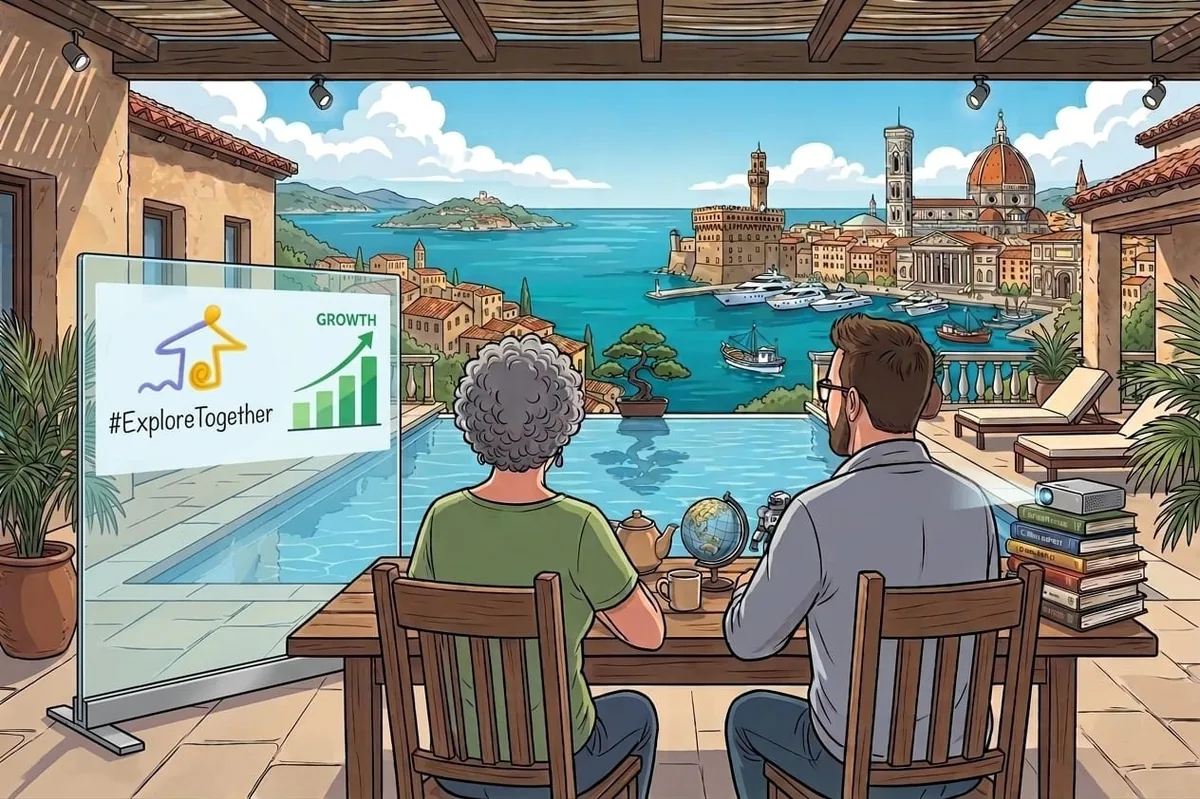
When we strip away the superficial distractions of the marketplace, we find that the foundational bedrock of any enduring enterprise rests upon the physical side of the ledger: the tangible Asset, the physical Sanctuary. To elevate a property from a simple piece of real estate into an institutional sanctuary requires an entirely different vocabulary of design and execution. It is the deliberate process of transformation where physical spaces cease to be mere operational overhead and instead become the primary physical manifestations of an organization’s sovereign authority. This elevation is achieved not through superficial decoration, but through a rigorous commitment to quality, materiality, and spatial intelligence.
Consider a physical property selected for its strategic significance. In its raw form, it is merely a container for human activity. However, when subjected to an architectural philosophy of elevation, every dimension of the space is recalibrated. The choice of materials shifts from the transient and synthetic to the permanent and organic — materials that do not degrade with time but instead develop a rich, authoritative patina. The flow of light, the control of acoustics, and the deliberate creation of spatial sequences are engineered to evoke a sense of quiet power. The physical sanctuary becomes an island of stability in an otherwise chaotic world, a physical anchor where high-value relationships are forged and preserved far away from the vulgar noise of the common market.
Furthermore, the elevation of the physical asset serves as the essential baseline for all subsequent strategic expansions. A premium physical sanctuary possesses an inherent dignity that cannot be replicated by digital means alone; it provides the weight, the substance, and the undeniable credibility that justifies long-term investment. When an owner invests in the structural excellence of a physical location, they are not merely purchasing walls and roofs; they are establishing a fortress of independence. This physical sanctuary becomes a closed ecosystem of prestige, a tangible proof of concept that demonstrates to the world that the enterprise operates on a timeline measured not in quarterly reporting periods, but in decades. It is from this unshakeable physical foundation that the organization gains the leverage required to project its influence outward into the broader commercial landscape.
4. The Wisdom Corner: Narrative Data and Compounding Independence
To fully appreciate the structural necessity of this approach, we must transition from architectural theory to the rigorous domain of systemic performance, analyzing what our methodology defines as Narrative Data. In evaluating the strength of an enterprise sanctuary, traditional superficial metrics are entirely inadequate. We must look instead to deeper indicators of structural health: the sustained velocity of asset appreciation, the long-term compounding of organizational independence, and the substantial weight of proprietary asset retention. Current multi-year projections indicate an undeniable divergence in the market: organizations reliant on leased digital visibility face a compounding erosion of capital efficiency, whereas those anchored by proprietary sanctuaries experience an accelerating accumulation of structural value.
The true return on investment realized through asset elevation manifests as a profound transformation in capital efficiency. When an enterprise establishes its own sophisticated infrastructure, the financial resources previously lost to the continuous tax of external attention acquisition are permanently recaptured. This creates a powerful compounding effect. Instead of capital leaving the organization to enrich third-party platforms, it remains within the enterprise ecosystem, continuously enhancing the intrinsic value of the primary asset. This accumulation of weight alters the market dynamics surrounding the organization; the enterprise no longer needs to aggressively pursue market alignment because its structural mass naturally draws high-value opportunities toward it.
As we look across the strategic horizon, the data reflects a clear, structural shift in how market authority is maintained. The weight of an elevated asset provides an unprecedented degree of insulation against external economic volatility. While competitors are forced to continuously adjust their operational models to survive the unpredictable shifts of external distribution networks, the owner of a proprietary sanctuary remains entirely unbothered. The internal metrics of such an enterprise reveal an exceptionally stable baseline of operation characterized by high client retention, significant organic advocacy, and a dramatic reduction in the cost of long-term relationship maintenance. This is the quiet, undeniable testimony of the numbers: a mathematical confirmation that true structural architecture invariably yields the highest form of enduring financial strength.
5. The Digital Horizon: Licensing and the Professional Annuity
With the physical sanctuary firmly established as an unshakeable foundation, the sophisticated enterprise is uniquely positioned to gaze toward the Digital Horizon, transitioning seamlessly to the complementary aspect of our methodology: the golden soul of the architecture. This phase is not about entering the chaotic digital marketplace to beg for attention; rather, it is about projecting the absolute authority of the physical asset into the digital realm to achieve absolute technological independence. Here, the enterprise transforms its proprietary knowledge, its unique spatial methodologies, and its institutional prestige into highly structured, sovereign digital assets that operate completely free from external interference.
The primary engine of this digital expansion is the establishment of a robust framework for Licensing and the creation of a professional annuity. By codifying the unique operational excellence and architectural intelligence of the physical sanctuary, the enterprise creates an intellectual asset that can be replicated and deployed across global markets without diluting its core value. This licensing model allows the organization to generate continuous, compounding revenue streams that are entirely decoupled from traditional manual labor or linear time investments. It represents the ultimate fusion of physical substance and digital scalability: a professional annuity that continuously feeds the enterprise repository, ensuring that the organization’s financial independence becomes entirely self-sustaining.
This sovereign approach completely redefines the enterprise’s relationship with technology. By rejecting the standard dependencies of the modern marketplace, the organization builds its own proprietary digital architecture, ensuring that its data, its relationships, and its intellectual property remain completely within its own custody. This level of technological independence means the enterprise is no longer vulnerable to sudden algorithmic shifts, arbitrary platform policy changes, or the escalating costs of third-party digital infrastructure. The digital assets become an extension of the physical sanctuary — equally permanent, equally secure, and equally dedicated to the quiet, systematic cultivation of long-term enterprise legacy.
6. Open Reflection: The Crossroads
The modern enterprise stands at a critical, unavoidable crossroads: will you continue to pay an ever-increasing vanity tax to maintain a fleeting presence on rented land, or will you choose the rigorous path of structural elevation to build a sanctuary that you truly own? True autonomy is never found in the chaotic applause of the crowd; it is found in the deliberate, mathematical precision of an architecture designed for permanence. How much longer will your capital chase superficial applause before it flows into an enduring legacy?
As the global market landscape grows increasingly volatile, the necessity of securing your structural independence becomes paramount. In our next strategic briefing, we will explore the precise mechanisms required to transition this sovereign authority into the global sphere, revealing how the blueprint of your physical sanctuary can be leveraged to dominate international licensing corridors. The architecture of your future awaits its final, golden expansion.
If you’d like to explore how Wise in Blue can help you stop paying the vanity tax and start building a sanctuary you own, get in touch with us — we offer a free initial consultation with no commitment.