In the current global landscape, we are navigating a paradox of ownership that is as subtle as it is paralyzing. The average market participant operates under the comforting illusion of control, while in reality remaining dangerously anchored to a digital ecosystem designed to commodify their very existence. We are witnessing the saturation of what our methodology calls the standardization trap: a race to the bottom where physical properties are treated as interchangeable goods, and digital presence is, in effect, rented from monolithic gatekeepers. This is the era of the frantic intermediary — a time in which the noise of the crowd is tragically mistaken for the signal of progress.
1. The Socio-Economic Hook: Deconstructing the Illusion of Ownership
If we look at the common failures of the rental and strategic industries with critical detachment, the diagnosis is unforgiving. Most operators settle for floating in a state of operational chaos, delegating the governance of their patrimony to external algorithms that can shift the ground beneath their feet with a single silent update. They chase the fast and the cheap, without realizing that those are merely euphemisms for structural fragility. It is a world of ephemeral subscriptions, where the concept of long-term professional yield is sacrificed on the altar of immediate but ever-thinner margins.
Our view is that the true failure of the contemporary owner lies in the split between the physical element and the strategic one. They treat the property as a static object and the digital strategy as a necessary nuisance, often outsourced. In doing so, they remain vulnerable. They remain users rather than architects. The market today does not need more participants — it needs governors: individuals who understand that real independence is not found on the path of least resistance, but in the deliberate elevation of one's legacy into a fortified sanctuary of wealth and technological freedom.
2. The Brilliant Analogy: The Vitruvian Asset
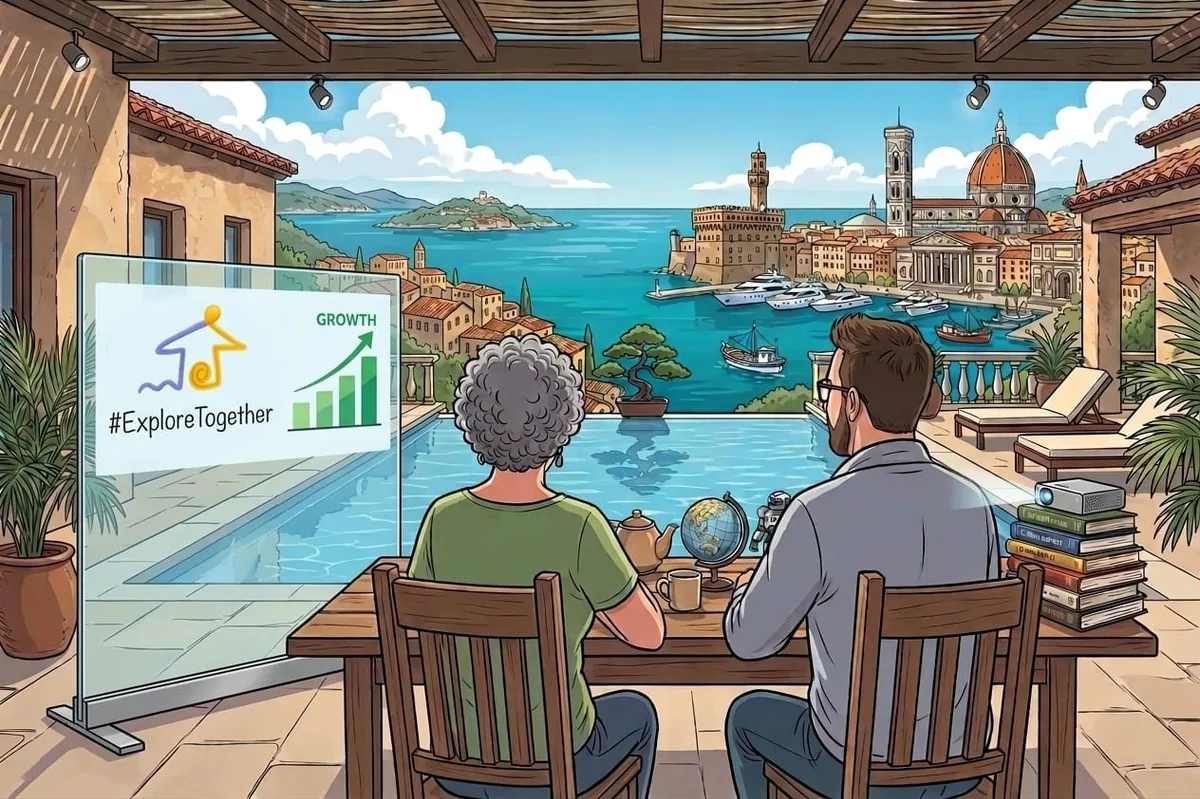
To grasp the transformation from mere property into Sovereign Asset, we must turn our gaze to the principles of Renaissance architecture — specifically to the Vitruvian triad: Firmitas (solidity), Utilitas (utility), and Venustas (beauty). In the 15th century, a building was not a mere shelter; it was a manifestation of cosmic order and human intellect. An architect did not simply stack stones; they orchestrated a symphony of proportions that elevated the inhabitant.
Imagine, for a moment, the construction of a great cathedral. The foundations represent the physical asset — the raw, heavy reality of the earth. But without the mathematical grace of the arches and the celestial light filtered through the stained glass, it remains a pile of stones without purpose. The digital strategy we champion is the Golden Section of the modern era. It is the invisible geometry that turns a cold structure into a vibrant, profitable entity. Just as Brunelleschi did not merely build a dome but engineered a new way for humanity to interact with gravity and space, the modern investor must engineer a new way for their wealth to interact with the global market.
"The pixel and the key are not disparate tools; they are the compass and the square of the contemporary builder."
When we speak of elevating a physical space into a sanctuary, we are speaking of structural alchemy. A sanctuary is protected, deliberate, and governed by its own internal laws. In the Renaissance, the Studiolo was a private space of reflection and intellectual power — a sanctuary within the palace. Our methodology asks that your asset become the digital and physical equivalent of the Studiolo: a place where the chaos of the outside world is filtered through your proprietary technology, leaving only the pure essence of professional yield and sovereign control. To ignore either of the two pillars is to collapse the whole structure; a dome without a base is a fantasy, and a base without a dome is a ruin destined for oblivion.
3. Deconstruction of the Asset: The Physical Sanctuary
When we move beyond the surface metrics of the traditional rental market, we encounter the true soul of the physical entity: the Sanctuary. The transformation begins with a fundamental shift of perception. A property is never just a collection of square meters; it is a container of experience and a fortress of value. To achieve asset elevation, one must first strip away the layers of standard hospitality that have made the industry bland and predictable.
Elevating the physical asset requires an obsession with the tangible quality of the environment. It is the realm of physical touch, of the scent of the space, of the silence of a well-governed sanctuary. It is the categorical refusal of the cheap in favor of the enduring. When an owner observes their property through the lens of the sanctuary, every operational decision changes radically. We no longer speak of maintenance, but of preservation of excellence. We do not discuss occupancy rates in the abstract, but the density of value within the walls.
This physical governance is the pedestal of independence. By treating the asset as a sanctuary, the owner creates a barrier to entry that no purely digital competitor can replicate. It is a return to the tactile reality of wealth. Yet this physical excellence must be married to a clear architectural vision. The sanctuary is not a museum; it is a dynamic entity that generates professional yield. It demands an operational discipline that mirrors the precision of a master artisan. This is where many fail: they lack the resolve required to handle the raw data of physical management, preferring the clean and detached world of the screen. But for those ready to reclaim their technological freedom, the sanctuary is the ultimate proof of power. It is the key that opens the door to a legacy that is at once physical and permanent.
4. The Wisdom Corner: The Narrative of Data and Impact
In this section we must confront the weight of evidence. Although the language of our philosophy is refined, the engine underneath is fueled by raw, uncompromising data. Looking to the horizon of 2026, the metrics of success have evolved. We no longer take comfort in the vague promises of traditional marketing; we seek instead the structural integrity of return on investment through the lens of asset elevation.
The weight of a well-governed asset is felt in the stability of its professional yield. When an asset is elevated from a simple listing to a sanctuary, the impact on return is not merely linear, but geometric. We observe a deep shift in the quality of the capital it attracts. By removing the intermediaries and the external technological dependencies that drain the typical owner, net retention of wealth undergoes a massive expansion. The data suggests that technological independence — owning the very tools that govern the asset — drastically reduces the friction tax that afflicts the industry.
Imagine the impact of a system in which every interaction with the asset is recorded, analyzed, and optimized without a third party subtracting a percentage from the soul of the business. Projections for 2026 indicate that those who control their own licensing model and operational flow will see a resilience that far surpasses that of those entrusted to the chaos of external platforms. We measure success through what we call the Professional Yield Index, an internal metric that evaluates the longevity and passive strength of the income flow. The data is unambiguous: the wiser the architecture of the asset, the lower the volatility. We are not interested in the peaks of a seasonal market; we are interested in the steady, rhythmic heartbeat of a sanctuary optimized for the long-term elevation of the owner's patrimony. The impact is felt not only in currency, but in the reconquest of time and the total eradication of the intermediary's shadow.
5. The Digital Horizon: The Gold Strategy of Independence
Having established the physical sanctuary and the data-based foundation, we must now ascend toward the Gold soul of our philosophy: the Digital Horizon. This is the point where the pixel meets the key in a marriage of pure strategy. True technological independence is not having a website or a social media presence; those are the standard tools of followers. For the architect of a Sovereign Asset, the digital horizon is defined by the creation of a proprietary ecosystem.
Our view holds that the ultimate goal of any digital strategy is the securing of a Licensing model. Think of this as the transition from being a worker in the field to being the owner of the map. By developing an approach to hospitality and asset management that is unique and technologically autonomous, the owner moves into the realm of a truly scalable professional yield. We are stepping away from the chaos of digital marketing and heading toward the precision of architectural strategy. This is the evolution from pixel — the fleeting, temporary attention of the internet — to key: permanent access to wealth.
Technological independence means that your digital interface is not an empty shell provided by a third-party subscription; it is the digital manifestation of your operational soul. It is the medium through which the sanctuary is shared with the world on the owner's terms. In this Gold phase, the asset becomes a beacon of professional yield, where the wealth generated is no longer tied to the hours of the day, but to the strength of the system itself. This is the Licensing of excellence. It is the realization that, once the architecture is solid, the model can be replicated, protected, and elevated infinitely — well beyond the constraints of a single physical location.
6. Open Reflection: Challenging the Status Quo
We have explored the architecture of the sanctuary and the digital horizon of the Sovereign Asset, yet one fundamental question remains for the modern governor. Are you truly the owner of your legacy, or are you merely a high-level tenant in someone else's digital empire? The distinction is subtle — until the moment the external algorithm decides to mutate. We invite you to consider whether your current path is leading to a Licensing of your wisdom or to a continuation of submission to your own obsolescence.
The marriage between the Lavender component and the Gold one is not a mere suggestion; it is the only viable path for those who refuse to be commodified by the chaos of the market. But building such an architecture demands far more than intent; it requires a specific set of operational blueprints. As we close this chapter on the Sanctuary Paradigm, we must prepare for the next logical step of the Action Plan.
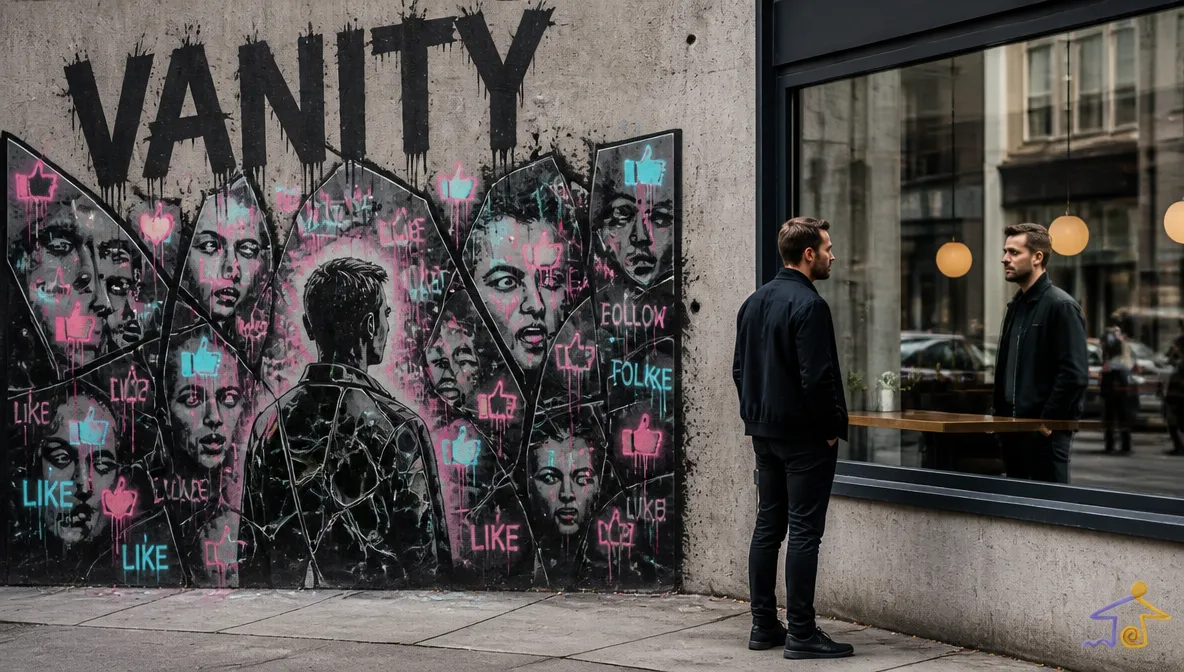
Tomorrow, we move from the theory of the key to the mechanics of the lock. We will examine the specific protocols required to ferry your physical patrimony into a digitally independent powerhouse. The door is open, but the question remains: are you ready to stop watching the reflection on the screen and start governing the light that creates it? The transition from management to governance begins on the next turn of the page.
If you'd like to explore how Wise in Blue can help you architect your own Sovereign Asset, get in touch with us — we offer a free initial consultation with no commitment.